
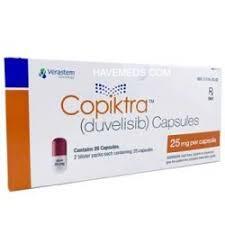
Copiktra (duvelisib)
Copiktra (duvelisib) is a prescription oral cancer medicine used to treat certain blood cancers. It belongs to a class of drugs called PI3K (phosphoinositide 3-kinase) inhibitors, which work by blocking signals that help cancer cells grow and survive.
Description
Copiktra (duvelisib)
What it is
Copiktra (duvelisib) is a prescription oral cancer medicine used to treat certain blood cancers. It belongs to a class of drugs called PI3K (phosphoinositide 3-kinase) inhibitors, which work by blocking signals that help cancer cells grow and survive.
It was developed for specific types of lymphomas and leukemia, especially when other treatments have failed.
Approved uses
Copiktra is used to treat adults with:
- Relapsed or refractory chronic lymphocytic leukemia (CLL)
- Small lymphocytic lymphoma (SLL)
- Follicular lymphoma (FL) after at least two prior therapies
It is typically used when cancer has returned or stopped responding to other treatments.
How it works
Duvelisib blocks PI3K-δ and PI3K-γ enzymes, which are involved in:
- Cancer cell growth and survival
- Immune cell signaling that can support tumor progression
By inhibiting these pathways, Copiktra helps slow or stop the growth of malignant lymphocytes.
Dosage and administration
- Usually taken orally twice daily
- Swallowed as capsules, with or without food
- Treatment continues as long as it is effective and tolerable
- Dose adjustments may be required for side effects
Common side effects
Some of the more frequent side effects include:
- Diarrhea or colitis
- Fatigue
- Nausea
- Fever
- Cough
- Low blood counts (neutropenia, anemia, thrombocytopenia)
Serious risks (boxed warnings)
Copiktra carries serious warnings for:
- Severe infections (bacterial, viral, fungal)
- Diarrhea or colitis that can be severe or life-threatening
- Skin reactions
- Pneumonitis (lung inflammation)
Because of these risks, patients require close medical monitoring.
Monitoring requirements
Doctors typically monitor:
- Complete blood counts (CBC)
- Liver function tests
- Signs of infection
- Gastrointestinal symptoms (especially diarrhea)
- Lung symptoms (cough, breathing issues)
Drug interactions
Copiktra may interact with:
- Strong CYP3A inhibitors/inducers (affect drug levels)
- Immunosuppressive agents (increased infection risk)
- Vaccines (live vaccines are usually avoided)
Important precautions
- Not recommended during pregnancy (can harm the fetus)
- Breastfeeding is generally not advised
- Increased infection risk requires preventive care in some patients
- Patients may need prophylaxis for certain infections (as directed by a doctor)




Reviews
There are no reviews yet.