
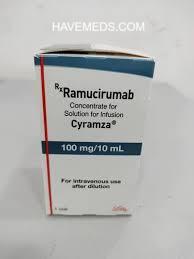
Cyramza (ramucirumab)
Ramucirumab is indicated for the treatment of advanced or metastatic cancers, including gastric or gastroesophageal junction adenocarcinoma, non-small cell lung cancer (NSCLC), colorectal cancer, and hepatocellular carcinoma (HCC), either as monotherapy or in combination with other chemotherapeutic agents.
Description
Cyramza (Ramucirumab) – Overview
Cyramza is a targeted cancer therapy used to treat several advanced or metastatic cancers. It is usually given when other treatments have already been tried.
It is a prescription-only intravenous (IV) medication, given in a hospital or clinic setting as an infusion into a vein.
How it works (mechanism of action)
Cyramza is a monoclonal antibody that targets a protein called VEGFR-2 (vascular endothelial growth factor receptor 2).
- Tumors need new blood vessels to grow and spread.
- VEGFR-2 helps stimulate formation of these blood vessels.
- Cyramza blocks VEGFR-2 → reduces tumor blood supply → slows tumor growth.
In simple terms:
it “starves” tumors by cutting off their blood supply.
Conditions it treats
Cyramza is used in adults with advanced cancers such as:
- Stomach (gastric) cancer
- Gastroesophageal junction (GEJ) cancer
- Colorectal cancer
- Non-small cell lung cancer (NSCLC)
- Hepatocellular carcinoma (liver cancer)
It may be used:
- Alone, or
- In combination with chemotherapy (such as paclitaxel, FOLFIRI, or docetaxel)
How it is given
- Given as an IV infusion
- Typically every 2 weeks or in 21-day cycles
- Dose depends on body weight and cancer type
- Requires regular monitoring (blood pressure, urine tests, blood counts)
Common side effects
Some of the more common side effects include:
- High blood pressure
- Fatigue / weakness
- Diarrhea
- Nosebleeds
- Low white blood cell counts
- Mouth sores or irritation
- Loss of appetite
Serious risks (important)
Cyramza can sometimes cause serious complications:
1. Bleeding
- Can range from nosebleeds to severe internal bleeding
2. Blood clots
- May lead to stroke or heart attack
3. Poor wound healing
- Surgery may require stopping the drug temporarily
4. High blood pressure
- Can become severe if not controlled
5. Gastrointestinal perforation (rare but serious)
- A hole in the stomach or intestines
Who should be careful
Doctors are especially cautious if a patient has:
- Uncontrolled hypertension
- Recent surgery or planned surgery
- History of bleeding or blood clots
- Kidney or liver issues
Key takeaway
Cyramza (ramucirumab) is a targeted anti-angiogenesis cancer drug that works by blocking blood vessel growth to tumors. It does not directly kill cancer cells but slows or starves tumor growth, and is commonly used in advanced-stage cancers alongside chemotherapy.

Reviews
There are no reviews yet.