
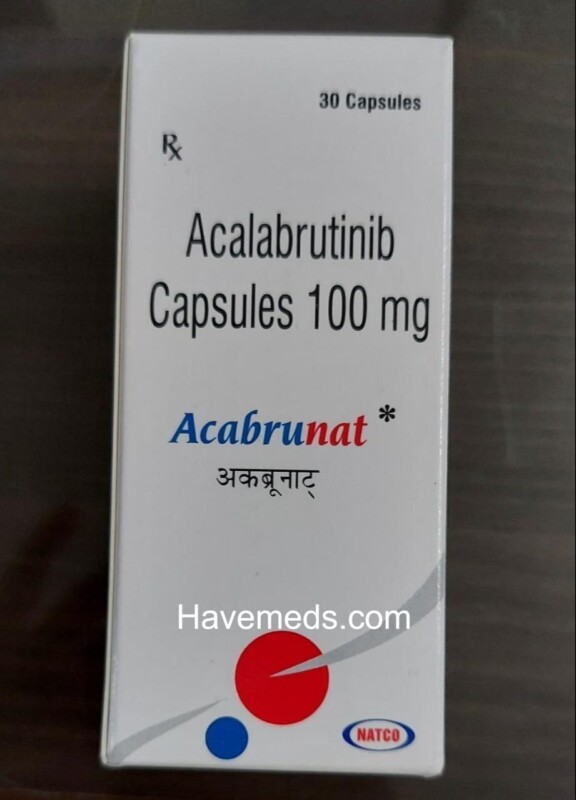
Acabrunat 100mg Capsule (Acalabrutinib)
Acabrunat Capsule is used to treat certain types of blood cancer such as mantle cell lymphoma, chronic lymphocytic leukemia, and small lymphocytic lymphoma. It works by blocking a protein that helps cancerous blood cells grow and survive, which helps slow the disease.
Description
Acabrunat (Acalabrutinib) – Drug Information
Acabrunat is a prescription anticancer medicine containing Acalabrutinib 100 mg, a targeted therapy belonging to the class of Bruton’s Tyrosine Kinase (BTK) inhibitors. It is manufactured by Natco Pharma and is used to treat certain blood cancers.
Uses
Acabrunat is used in adults for:
- Chronic Lymphocytic Leukemia (CLL)
- Small Lymphocytic Lymphoma (SLL)
- Mantle Cell Lymphoma (MCL), particularly in patients who have received prior treatment.
How It Works
Acalabrutinib blocks the BTK protein, which helps cancerous B-cells grow and survive. By inhibiting this protein, the drug slows or stops the growth of malignant cells.
Common Side Effects
Patients may experience:
- Headache
- Diarrhea
- Fatigue
- Muscle and joint pain
- Anemia (low red blood cells)
- Neutropenia (low white blood cells)
- Low platelet count
- Upper respiratory tract infections
Serious Risks
Seek medical attention if you develop:
- Unusual bleeding or bruising
- Severe infections or fever
- Irregular heartbeat
- Signs of liver problems
- Severe allergic reactions
Precautions
- Use only under the supervision of an oncologist.
- Regular blood tests are required during treatment.
- Avoid pregnancy during treatment; effective contraception is recommended.
- Inform your doctor about all medicines you take, especially blood thinners, antifungals, and acid-reducing drugs.
- Grapefruit products may interact with the medicine.
Dosage
The commonly prescribed dose is 100 mg twice daily, but dosage and duration should always be determined by the treating physician. Capsules should be swallowed whole and not crushed or chewed.
Summary
Acabrunat (Acalabrutinib) is a targeted oral therapy for specific B-cell blood cancers, including CLL, SLL, and MCL. It works by blocking BTK signaling, helping to control cancer growth. Because it can affect blood counts and increase infection or bleeding risks, careful medical monitoring is essential.




Reviews
There are no reviews yet.